The Radford Fire in 2022 and the Line Fire in 2024 did massive damage to the San Bernardino National Forest in the Big Bear area. High winds during the recent winter seasons added to the issue. Coupled with the still-standing weakened and dead trees, there is now a massive fuel load that could pose risks to the surrounding communities.
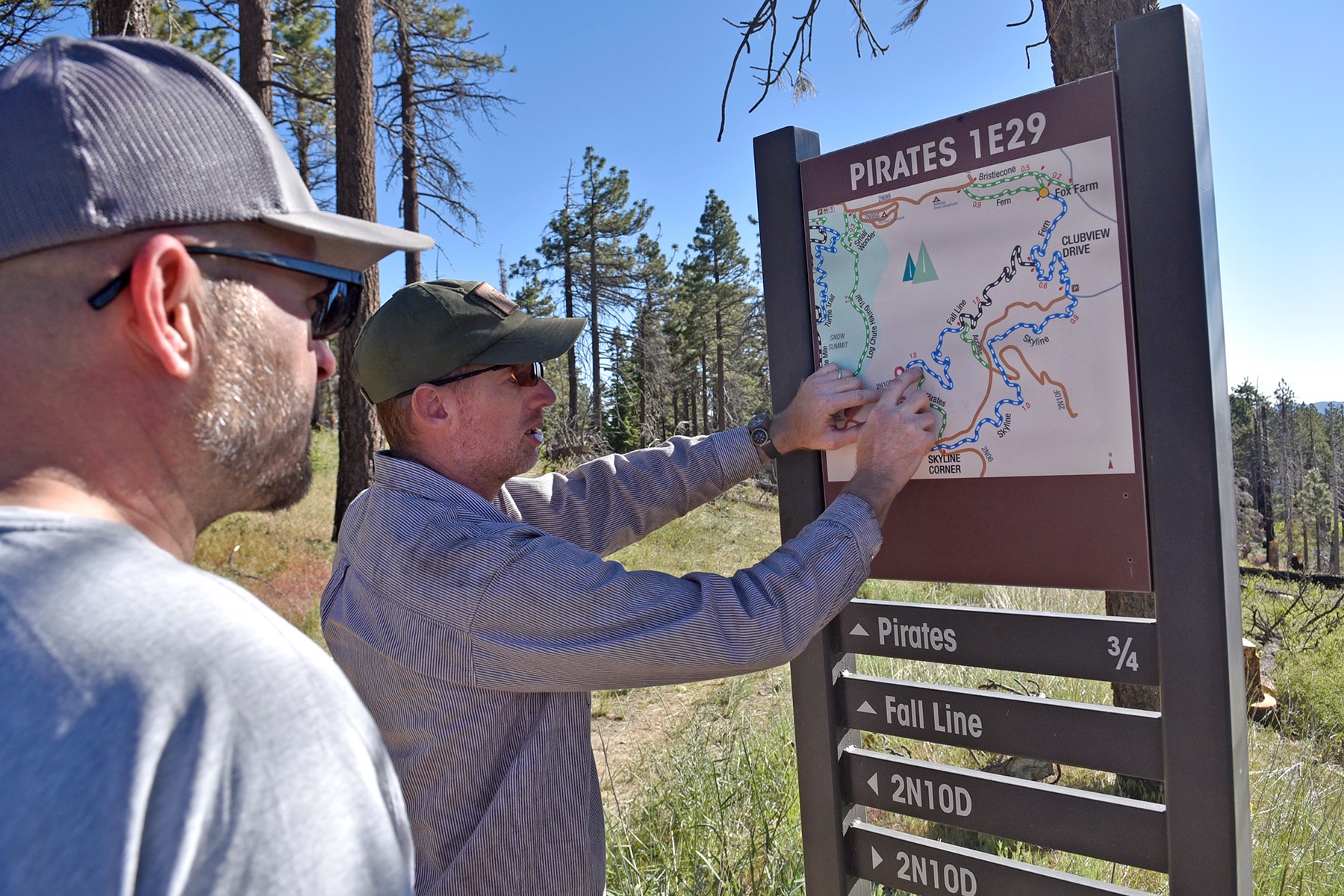
Mountain bikers and hikers know first-hand how these fires adversely affected the numerous South Shore trails. So much so that many of the South Shore trails are closed to this day. The area lines emergency routes, fire break trails and evacuation routes on the reverse slope of the communities.
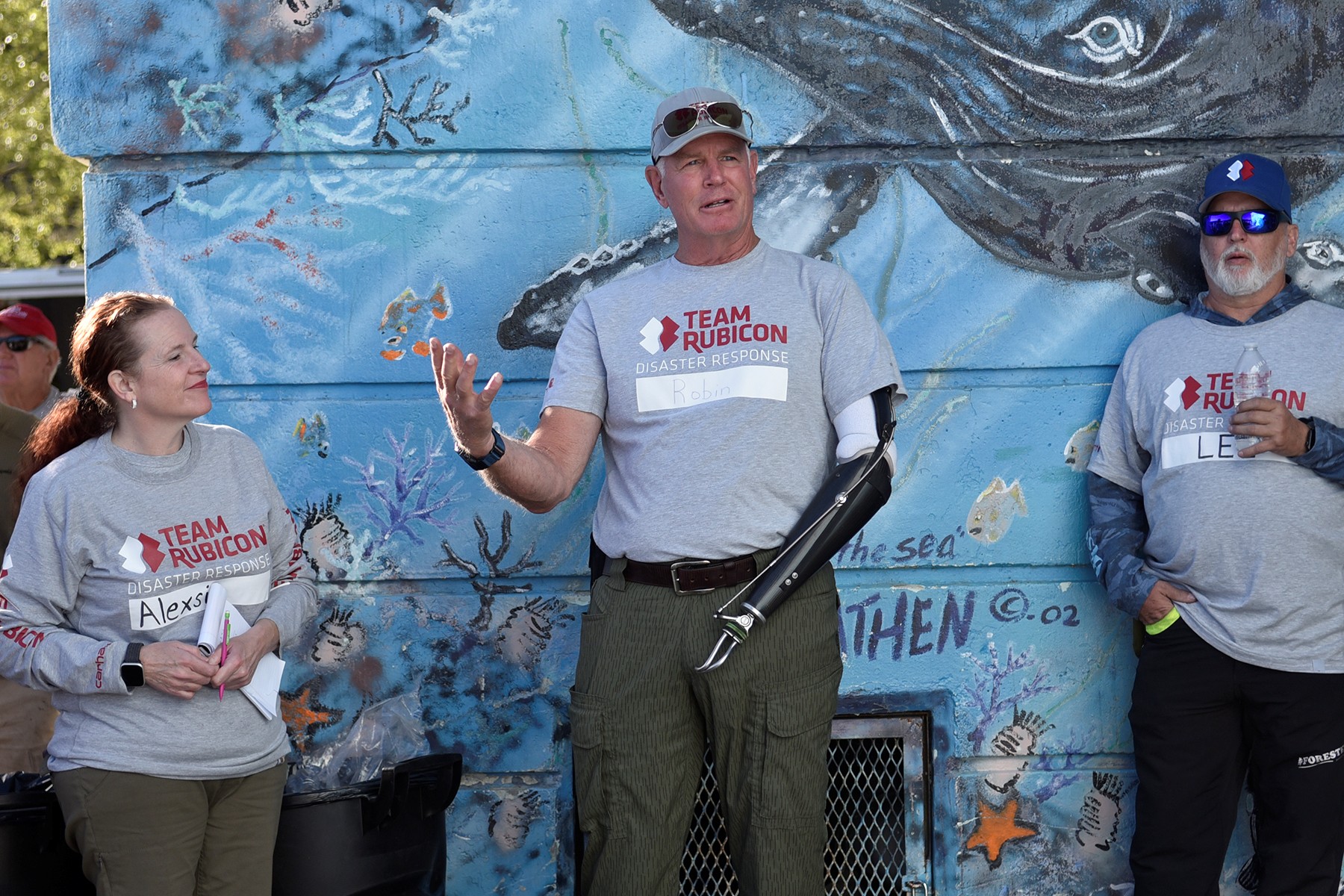
Big Bear resident Robin Brown, a retired firefighter, saw a need to address the issue. The San Bernardino National Forest is one of the most utilized forests in the nation and a major part of the Big Bear economy. More importantly, access to these roads and trails in the South Shore system needs to be open in the event of fire.
Brown, who is a volunteer with Team Rubicon, set the wheels in motion. Team Rubicon met several times over the past couple of years to discuss a tree removal plan for the South Shore. The US Forest Service requested assistance for mitigation, removal of hazardous trees and fuels in order to open the free travel of firefighting vehicles and other vehicles on roads and trails to support wildland firefighting activities.
That’s where Team Rubicon has stepped in. A nonprofit organization fueled by volunteers — ex military, retired first responders and the like — Team Rubicon goes where needed around the country to mitigate disasters — wildfire, hurricanes, flooding and more.
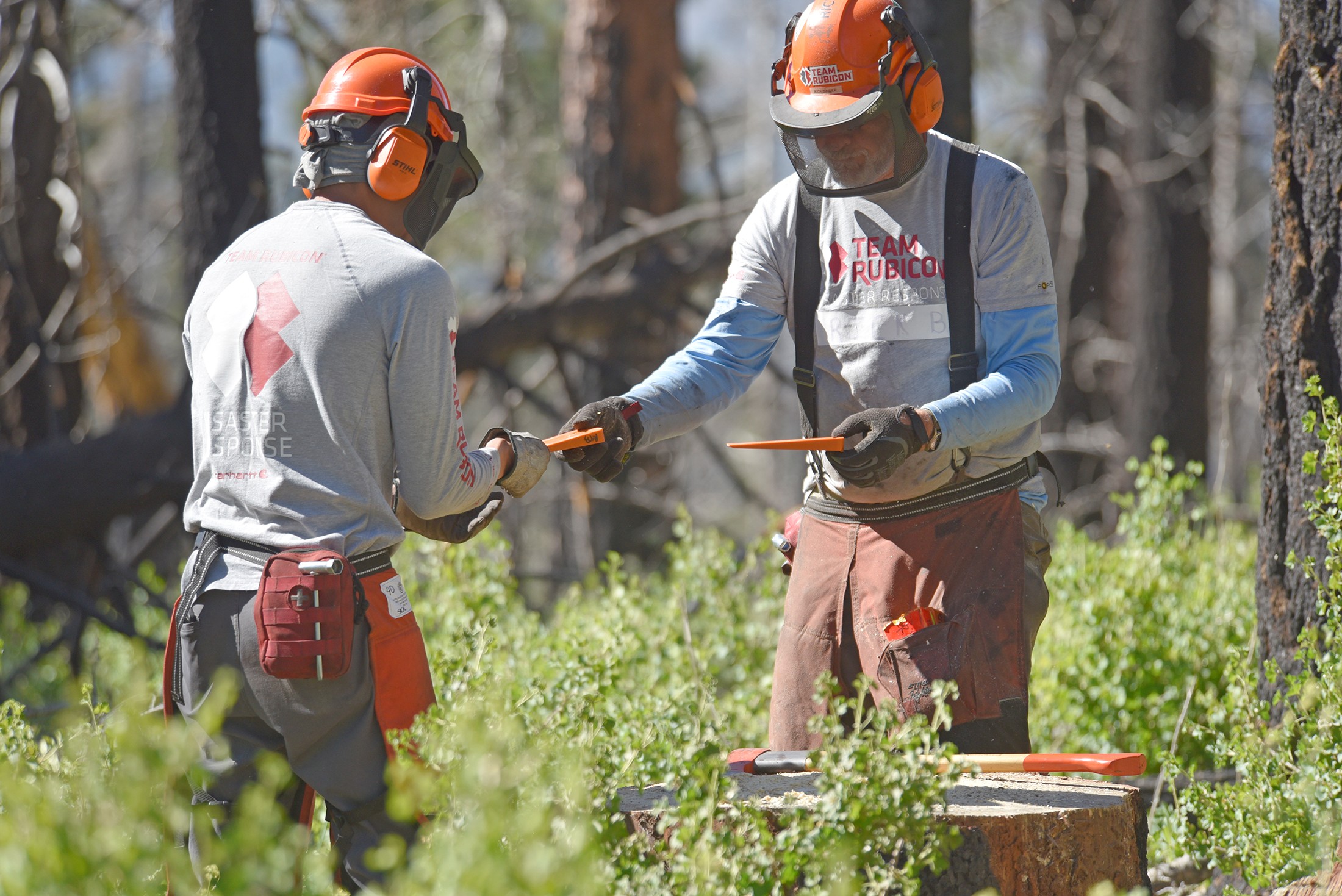
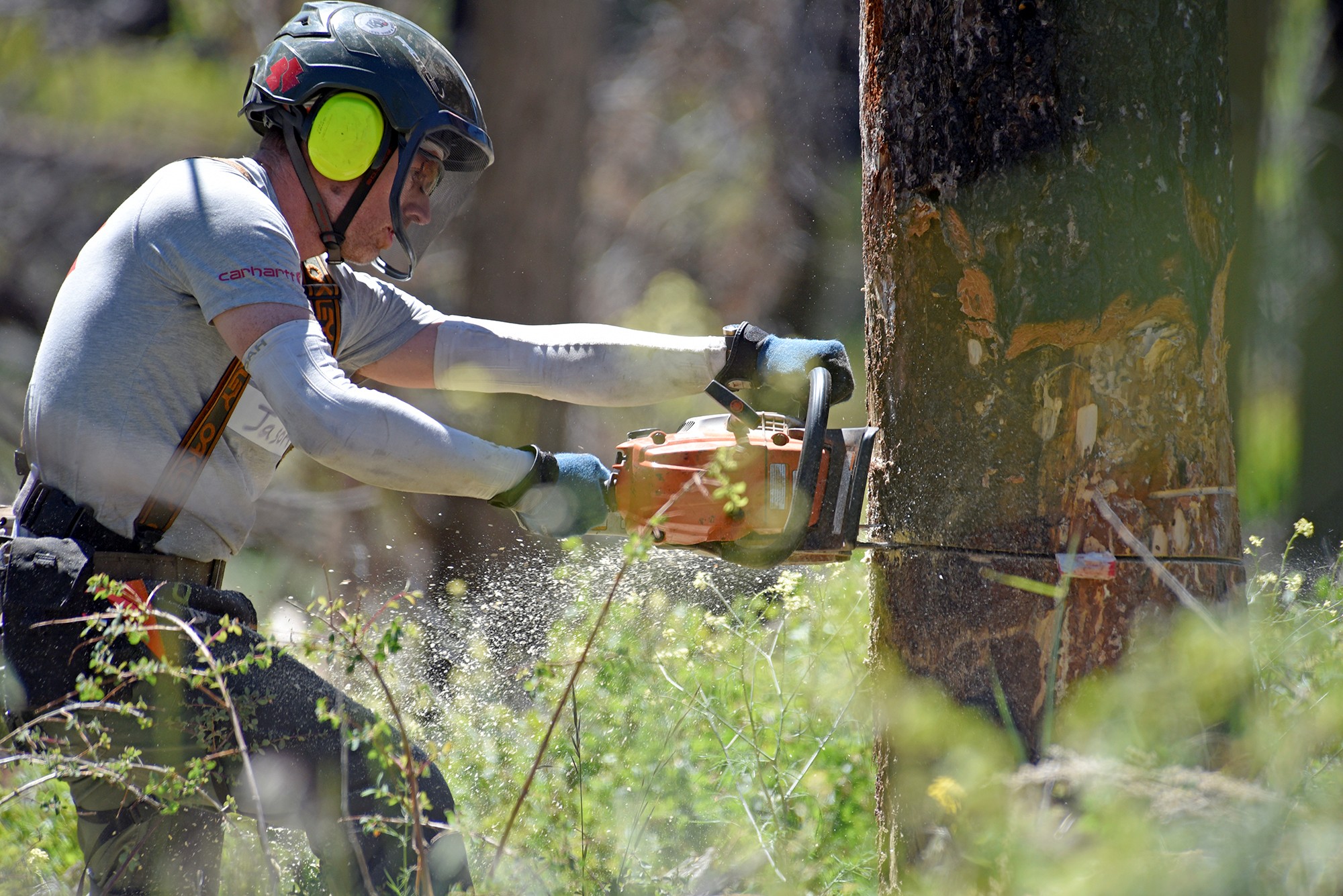
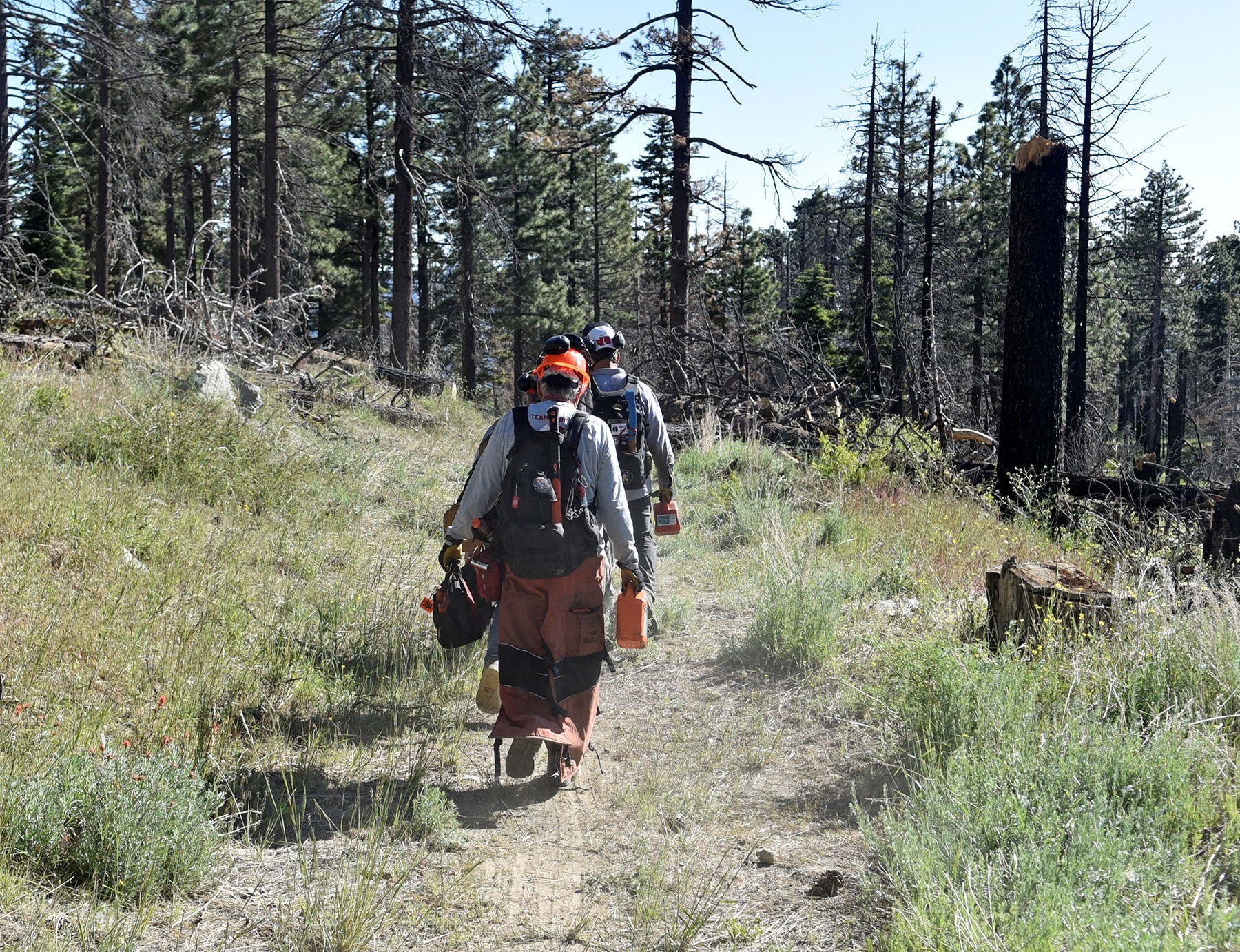
Now, the Team is in Big Bear throughout the month of June to help open access to the South Shore trails and roads. The goal is to fell hazardous trees, burned trees and hazardous trees and provide access for firefighters to fight potential fires. The project aligns with Team Rubicon’s We the Bold campaign as part of America’s 250th anniversary. According to Team Rubicon’s communications specialist, Thomas Brown, “We the Bold defines what we do with the responsibility given to us by those who came before: show up for one another through service. This is modern patriotism in practice. We invited everyone to join us in service at teamrubiconusa.org.”
Team Rubicon depends solely on grant money to help fund the project. These are non-paid volunteers who love what they do. Over the years, Team Rubicon has conducted dozens of wildfire recovery and mitigation operations in California as well as across the country. Greyshirt volunteers most recently responded to the Garden Grove chemical leak, floods in Michigan and storms in Mississippi.
Brown, a member of the Big Bear Cycling Association, is the safety leader on the Big Bear project. After five years of retirement Brown says he wanted to put his knowledge to use to respond and help with recovery work. “I found Team Rubicon,” Brown says. “I signed up as a volunteer. This is a good fit. I went in and signed up for their safety officer class.”
Brown served as a safety officer on the Altadena Fire team. Now, he’s working the Big Bear project. “Instead of heads bumping heads down the mountain, up here heads come together and flow down the mountain to the supervisor’s office and it allowed us in the door,” Brown says about how the project came about.
Team Rubicon volunteers come from all over the country. The team currently in Big Bear also includes sawyers from Canada and Australia. The volunteers are called Greyshirts because of the gray T-shirts they wear on the job.
Command leader Bob Yturralde of Palm Springs explains why the project is important. “Why we’re doing this, the basic simple answer is we are providing defendable space, providing a fire mitigation project that creates that defendable space, but we’re also creating a safety zone, getting rid of dangerous dead trees,” Yturralde says. “It provides a bit of a buffer not only for the people in Big Bear, but also visitors who use those trails, hike those mountains.”
Team Rubicon is a problem solving organization. “It’s not only let’s solve a problem, it’s let’s stop a problem,” Yturralde says. “We like to be proactive not reactive.”
This project has been in the making for four years, Yturralde says. In February of this year, things took off, he says. They walked the area, looked at the trees, made their plan of action. “This isn’t our typical operation, because of the skill set needed,” Yturralde. “The sawyers we have here are cream of the crop. You’ve got the top two sawyers in all of Team Rubicon overlooking the 40 some sawyers here.”
Seven strike teams were out on the forest on June 10. By June 13 a new wave of strike teams will be on the job. The first wave totals about 40 volunteers on the Big Bear project. “We’ll do 700 trees by the end of the week,” Yturralde says.
The team is also looking at the Clark’s Grade area, covering another five miles. They will walk that section on June 11 to decide on a plan. Yturralde says Team Rubicon is also in discussions with the US Forest Service to come back in July or August to continue work.
“There’s a lot of dead and hazardous trees out there,” he says.
Photos and Article Contributed by:
Kathy Portie
[email protected]
Big Bear Lake, CA 92315
818-631-0380
June 10, 2026
Photos are property of Kathy Portie and are not to be reused without permission.